Quick Summary / Key Takeaways
- Constipation on GLP-1 weight loss treatment is common and usually related to delayed gastric emptying and slower intestinal movement as the medication regulates appetite.
- Increasing daily water intake — often around 80 ounces or more depending on body size and activity level — helps soften stool and support overall digestive function.
- A fiber intake target of approximately 25–35 grams per day from whole foods can support bowel regularity, though increases should be gradual to avoid bloating.
- Light, consistent movement such as daily walking can stimulate natural bowel motility and improve digestive rhythm.
- Ongoing physician oversight is essential to safely adjust dosing, review symptoms, and determine whether supplements or additional support are appropriate.
Introduction

Starting a GLP-1 weight loss plan is an important step toward improving metabolic health, but some patients notice digestive changes early on. Constipation on GLP-1 can occur because medications such as semaglutide weight loss and tirzepatide weight loss intentionally slow gastric emptying and reduce appetite. This delayed digestion helps regulate hunger and support steady weight reduction, but it can also slow bowel movements, especially during the first few weeks or after a dose increase.
While constipation can feel uncomfortable, it is usually manageable with the right approach. Adjusting hydration, gradually increasing fiber, and maintaining regular movement often improve symptoms. In a doctor supervised weight loss setting, these changes are monitored carefully. Dose titration, symptom tracking, and individualized guidance are part of a structured medical weight loss program designed to balance effectiveness with comfort.
This guide explains why constipation happens during GLP-1 weight loss treatment and outlines practical, evidence-based steps you can take to improve digestive comfort. Our goal is to provide clear, medically grounded guidance that supports both safety and progress. If you would like individualized recommendations within a structured, medically supervised weight loss plan, you may consider completing a brief online evaluation with ThinEra to determine whether their approach is appropriate for you.
This content is for informational purposes only and does not replace individualized medical advice from a licensed healthcare provider.
Fiber-Rich Foods That Support Digestive Regularity During GLP-1 Weight Loss
| Food Item | Approximate Fiber | Typical Serving Size | Digestion Benefit |
|---|---|---|---|
| Chia Seeds | ~10 grams | 2 tablespoons | Adds soluble fiber to soften stool |
| Raspberries | ~8 grams | 1 cup | Provides fiber and water content |
| Lentils | ~15–16 grams | 1 cup cooked | Supports steady bowel movement |
| Avocado | ~10 grams | 1 medium fruit | Combines fiber with healthy fats |
Daily Digestive Support Strategies During GLP-1 Treatment
| Strategy | Typical Target Range | Suggested Timing | Primary Purpose |
|---|---|---|---|
| Water Intake | ~80+ ounces daily* | Consistently throughout the day | Helps soften stool and support colon function |
| Daily Walking | 20–30 minutes | Any consistent time | Stimulates natural bowel motility |
| Magnesium (if provider approved) | Individualized dosing | Often evening | Draws water into stool (osmotic effect) |
| Fiber Supplement (if needed) | 5–10 grams to start | With meals | Improves stool bulk and texture |
Before Starting GLP-1 Weight Loss: Digestive Preparation Checklist
- Obtain a reusable water bottle (for example, 24–32 ounces) to help track daily hydration consistently.
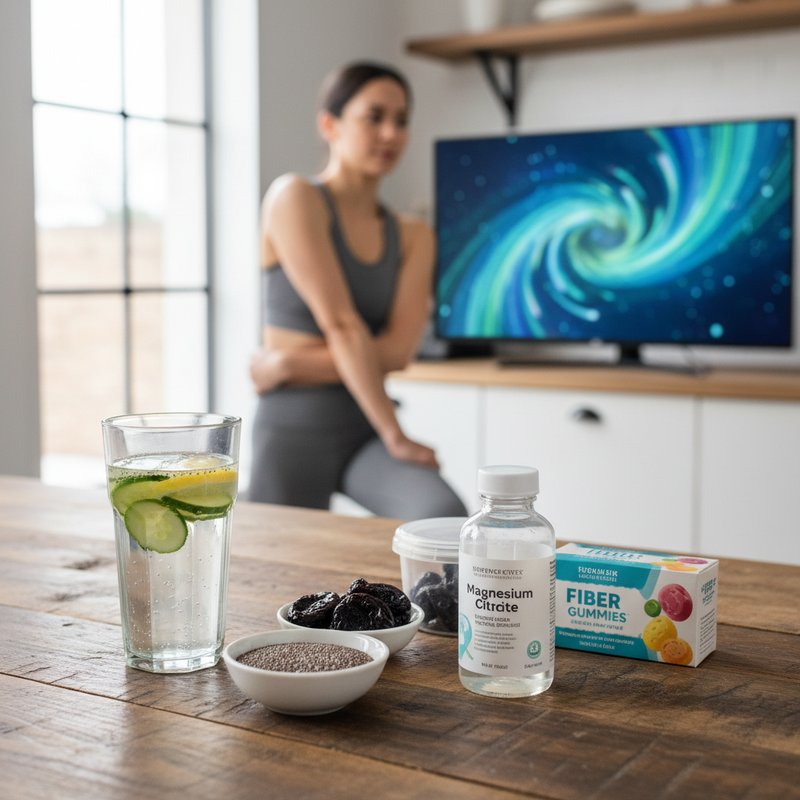
- Stock your kitchen with fiber-rich foods such as chia seeds, lentils, berries, oats, and leafy green vegetables to support bowel regularity.
- Discuss your baseline bowel habits, digestive history, and current medications during your clinical evaluation as part of your medical weight loss program
- If you are considering supplements such as magnesium citrate, review this with your provider before starting, especially if you have kidney conditions or take other medications.
After Starting GLP-1 Treatment: Ongoing Digestive Support Checklist
- Track bowel movement frequency and stool consistency in a simple log to identify changes early.
- Aim for consistent daily movement, such as walking, to support natural intestinal motility. (Step goals should be individualized based on fitness level.)
- Review digestive symptoms during scheduled telehealth weight loss visits to maintain ongoing physician oversight.
- Increase fiber gradually over several weeks while maintaining adequate hydration to minimize bloating or discomfort.
Table of Contents
Section 1: WHY CONSTIPATION CAN OCCUR WITH GLP-1 WEIGHT LOSS MEDICATION
Section 2: DIET AND HYDRATION STRATEGIES TO RELIEVE GLP-1 RELATED CONSTIPATION
Section 3: SAFE SUPPLEMENT AND MEDICATION OPTIONS FOR GLP-1 CONSTIPATION
Frequently Asked Questions
Section 1: WHY CONSTIPATION CAN OCCUR WITH GLP-1 WEIGHT LOSS MEDICATION
FAQ 1: Why does constipation on glp 1 happen?
Constipation can occur because GLP-1 medications intentionally slow gastric emptying and intestinal movement as part of how they support GLP-1 weight loss. By delaying how quickly food moves through the digestive tract, medications such as semaglutide weight loss and tirzepatide weight loss help increase fullness and reduce calorie intake. However, slower transit time allows the colon to absorb more water from stool, which can make bowel movements less frequent or harder, especially during the early stages of treatment.
This side effect is most common during dose escalation in a medically supervised weight loss program. With ongoing physician oversight, adjustments in hydration, fiber intake, and dosing can help manage symptoms safely. Constipation does not mean something is wrong, but it should be addressed early within a doctor supervised weight loss plan to maintain comfort and treatment adherence.
FAQ 2: Is this a permanent side effect?
For most patients, constipation related to GLP-1 weight loss is temporary. Gastrointestinal changes are common during the first several weeks of semaglutide weight loss or tirzepatide weight loss, particularly during dose escalation. Because these medications slow gastric emptying to support appetite regulation, the digestive system may need time to adjust. In many cases, bowel patterns improve as the body adapts to treatment.
Constipation may reappear temporarily when the dose is increased, which is why gradual titration and ongoing physician oversight are important. Within a doctor supervised weight loss plan, symptoms are monitored and addressed early through hydration guidance, fiber adjustments, and, if necessary, dose modification. Persistent or severe symptoms should always be discussed with your provider.
FAQ 3: How do these meds slow digestion?
GLP-1 medications slow digestion by delaying gastric emptying, which means food moves more slowly from the stomach into the small intestine. This is part of how GLP-1 weight loss works. Medications such as semaglutide weight loss and tirzepatide weight loss activate GLP-1 receptors that increase feelings of fullness and reduce appetite. Slower movement of food through the digestive tract helps you feel satisfied longer between meals.
Because transit time is extended, the colon has more time to absorb water from stool. This can lead to firmer or less frequent bowel movements, especially during the early stages of treatment or during dose increases. Within a doctor supervised weight loss plan, gradual titration and ongoing physician oversight help balance effectiveness with tolerability. Supporting digestion with adequate hydration and fiber is often part of managing this adjustment safely.

Section 2: DIET AND HYDRATION STRATEGIES TO RELIEVE GLP-1 RELATED CONSTIPATION
FAQ 4: What are the best high-fiber foods?
The best high-fiber foods for managing constipation during GLP-1 weight loss include chia seeds, ground flaxseed, raspberries, lentils, black beans, oats, and leafy vegetables. These foods provide a combination of soluble fiber, which absorbs water and softens stool, and insoluble fiber, which adds bulk and supports regular bowel movements. Because semaglutide weight loss and tirzepatide weight loss slow digestion, gradually increasing fiber intake can help support more comfortable bowel patterns.
It is important to increase fiber slowly and pair it with adequate hydration. Adding too much fiber at once without enough fluids may worsen bloating or constipation. Within a doctor supervised weight loss approach, dietary adjustments are discussed during follow-up visits as part of ongoing physician oversight to ensure digestion remains balanced and safe throughout treatment.
FAQ 5: How much water is actually enough?
Hydration needs vary by body size, activity level, and climate, but many adults benefit from aiming for approximately 80–100 ounces of fluids per day while on GLP-1 weight loss therapy. Because semaglutide weight loss and tirzepatide weight loss slow digestion, stool remains in the colon longer, allowing more water to be absorbed. If fluid intake is too low, this can contribute to harder stools and constipation. Drinking fluids consistently throughout the day, rather than all at once, helps maintain stool softness and regularity.
Within a doctor supervised weight loss approach, hydration is discussed during follow-up visits as part of ongoing physician oversight. Water should be your primary fluid source, though herbal teas and electrolyte-balanced options may also contribute. Proper hydration also supports kidney function and overall metabolic health during a medically supervised weight loss program.
FAQ 6: Can caffeine help or hurt?
Caffeine can stimulate bowel movement in some people, but its effect varies from person to person. Coffee and certain teas may increase intestinal muscle contractions, which can help trigger a bowel movement. However, caffeine can also have a mild diuretic effect, especially in higher amounts, which may contribute to fluid loss if overall hydration is not maintained. When using GLP-1 weight loss medications such as semaglutide weight loss or tirzepatide weight loss, maintaining adequate hydration is especially important because digestion is already slowed.
Within a doctor supervised weight loss approach, we recommend moderation. If you consume caffeinated beverages, balance them with sufficient water intake throughout the day. Caffeine should not replace proper hydration or fiber intake as part of a medically supervised weight loss program. Ongoing physician oversight allows digestive concerns to be addressed safely if constipation persists.
Section 3: SAFE SUPPLEMENT AND MEDICATION OPTIONS FOR GLP-1 CONSTIPATION
FAQ 7: Which magnesium is best for this?
Magnesium can help relieve constipation because certain forms draw water into the intestines, which softens stool and promotes bowel movement. Magnesium citrate is commonly used for short-term relief because of its osmotic effect. Magnesium oxide may also be used, though it can be less predictable in absorption. Magnesium glycinate is generally better tolerated for sleep support but is not typically used specifically for constipation. The right option and dosage should be discussed with your provider, especially if you have kidney conditions or are taking other medications.
When using GLP-1 weight loss therapies such as semaglutide weight loss or tirzepatide weight loss, constipation management should be approached carefully within a doctor supervised weight loss plan. Supplements should not replace hydration, fiber intake, or structured dose adjustments. Through ongoing physician oversight, your provider can help determine whether magnesium is appropriate and recommend a safe starting dose as part of your medically supervised weight loss program.
FAQ 8: Are stool softeners safe daily?
Stool softeners such as docusate sodium are sometimes used short term to help prevent hard stools, but they are not always intended as a permanent daily solution. They work by allowing more water to mix with the stool, making bowel movements easier and less uncomfortable. Unlike stimulant laxatives, they do not trigger bowel contractions, which makes them a gentler option in certain situations. However, long-term daily use should only be considered under medical guidance.
During GLP-1 weight loss treatment, including semaglutide weight loss or tirzepatide weight loss, constipation is often managed first with hydration, fiber adjustment, movement, and dose titration. In our doctor supervised weight loss approach delivered through telehealth weight loss visits, we review symptoms, timing, and overall response before recommending any over-the-counter product. Ongoing physician oversight ensures that stool softeners are used appropriately and that persistent symptoms are evaluated rather than masked.